Listen to a brief sample from the Prologue of Castle Gate – the Audiobook narrated by Eleanor Morton
🎧 Step back in time and across the veil.
While the audiobook is available on major platforms, only this exclusive bundle delivers the full sensory experience — downloadable audio, easy streaming, and the eBook for immersive reading.
🎁 What’s Included:
✅ Full Audiobook — professionally narrated by Scottish actress/comedian Eleanor Morton (MP3 download)
✅ Streaming Access — private, password-protected page for easy listening
✅ PDF eBook — read on your device of choice
✅ Bonus Companion Guide — listening tips, behind-the-scenes extras, and links to historical resources
💡 Why This Version?
This direct bundle gives you more than Audible or iTunes and supports indie creators directly.
💵 Price: $19.99 USD Includes all formats for the same price as the audiobook alone on retail platforms.
🔒 Secure Checkout via Payhip
Click below to purchase directly from the author — instant delivery, no account needed.
On March 8, 1924, over 170 men were killed in Castle Gate, Utah in one of the most devastating coalmine disasters in American history. Three of those men killed were my ancestors from one branch of my family tree. Another branch included the men who ran the mine.
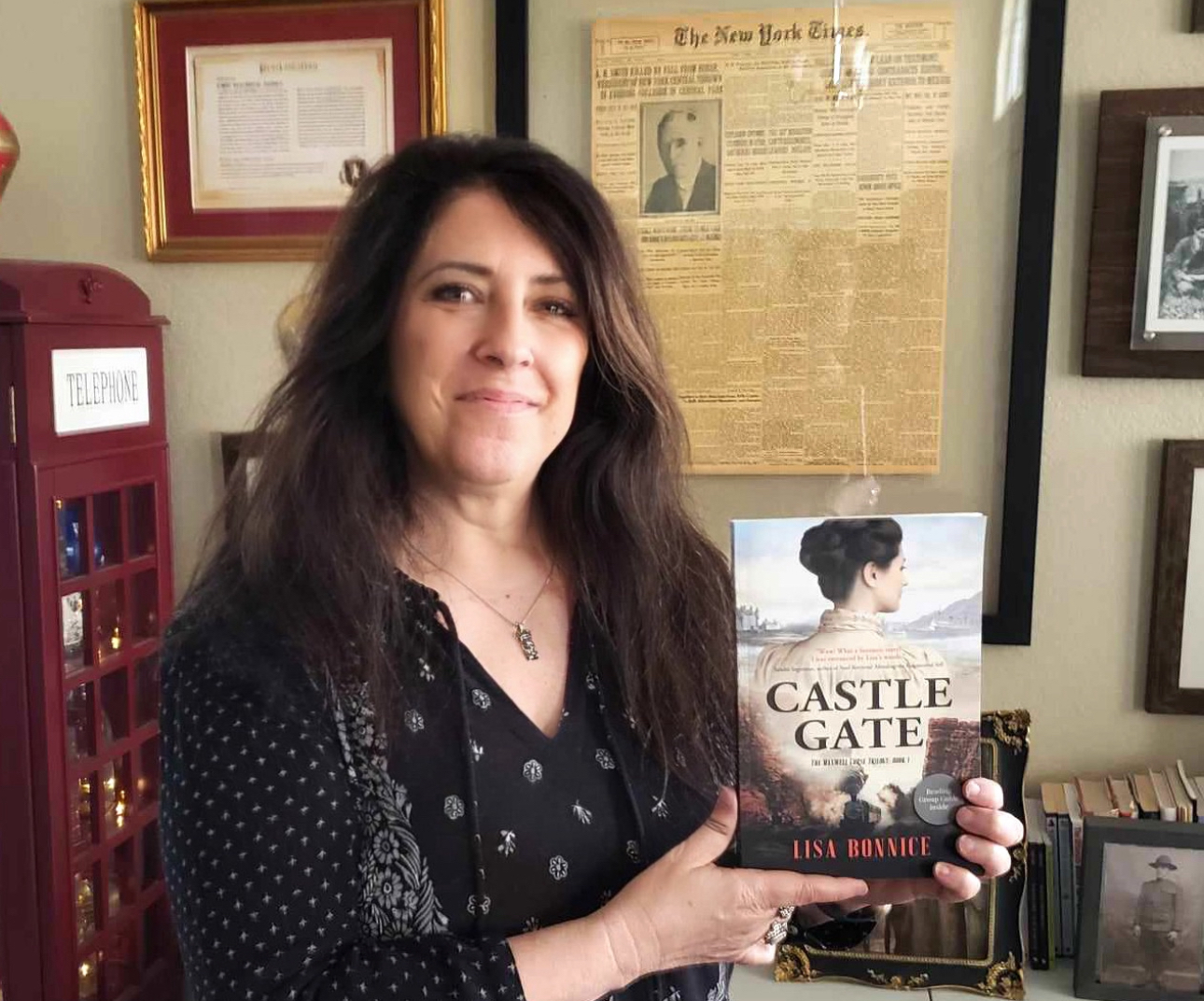
The story was so big that it was covered by international news outlets. The antique newspaper on display this March was purchased by me in 2021 during the writing of Castle Gate, as part of my genealogy research. I soon donated it to the museum due to the fragile state of the relic. I didn’t have the expertise to preserve something like this … it would have ended up in a drawer or box instead of receiving the care it deserved.
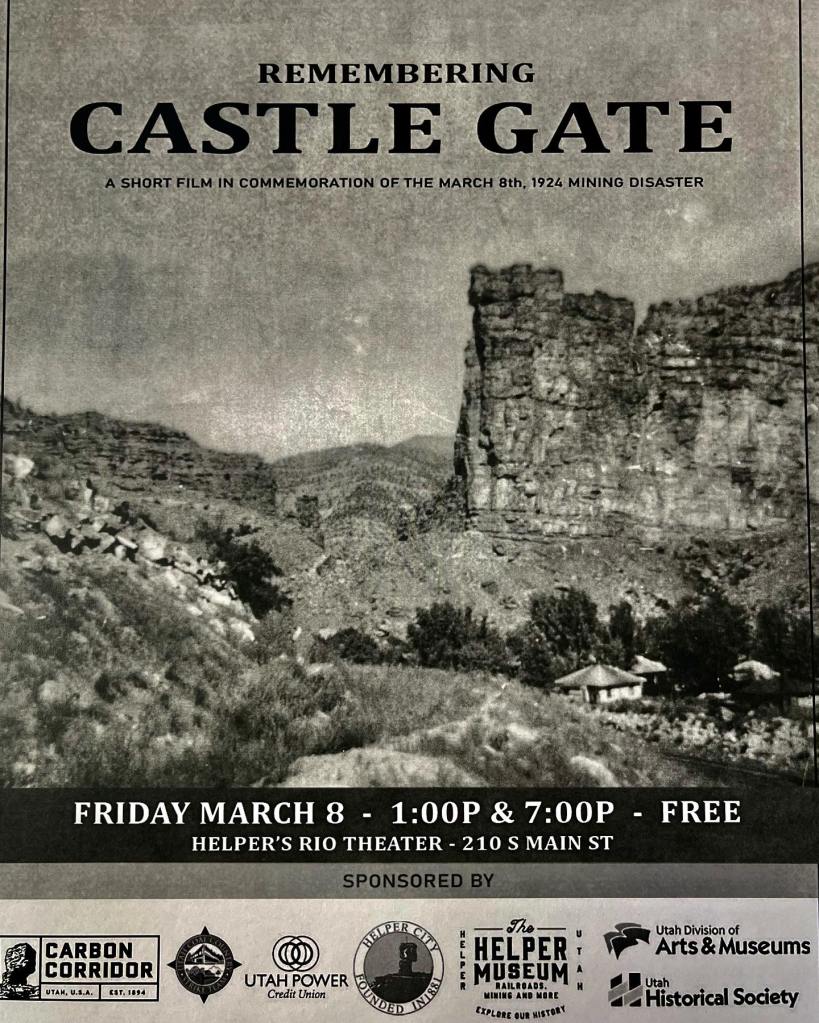
Castle Gate is now a ghost town—the only things remaining are the cemetery where many of the miners are buried and the barred entrance to Mine #2, where the explosion occurred. (See images in The Gallery)
The Helper Museum will be displaying the newspaper during their centenary commemoration of the Castle Gate Mine Disaster on March 8, 2024. That same day, next door at the Rio Theater (owned by Historic Helper City), a short documentary called Remembering Castle Gate will premiere.
I was interviewed at my home here in Phoenix last January to be featured in the documentary and be will present at the premiere, signing copies of Castle Gate. Additionally, and more importantly, I’ll be visiting and honoring the site where this horrific event occurred 100 years ago, changing the lives of so many people … including my family.
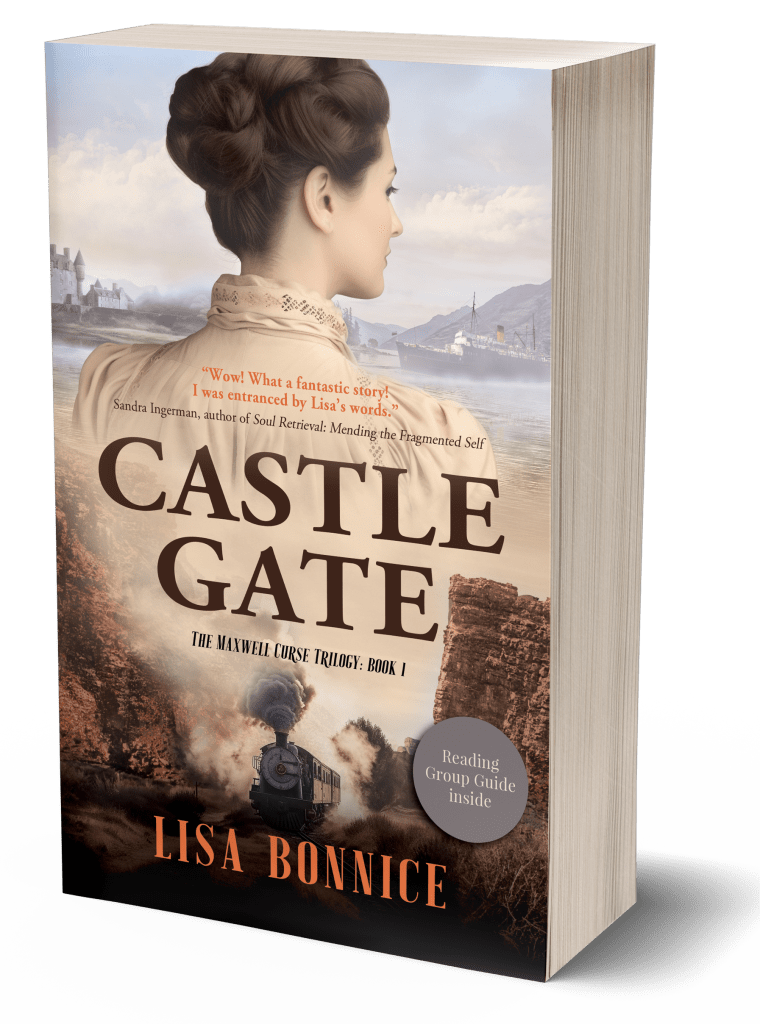
Based on years of exhaustive genealogical research, Castle Gatetells the story of a coal mining town shattered on that fateful day in 1924, and the Littlejohn and Garroch families who ran the mine and worked underground. Lisa Bonnice is a descendant of both families.
Castle Gateis filled with stories of those who lived and died that day, some of whom stayed home due to premonitions, and many more who ignored those warnings. It explores life in a rugged mining town during Prohibition, which was largely ignored … especially in nearby towns which were filled with saloons and brothels.
Lisa Bonnice is the author of Fear of Our Father, a best-selling true-crime novel which has been featured in television and radio programs in the US and the UK. She also authored a metaphysical comedy novel entitled The Poppet Master. A former associate producer for MSNBC.com, she is a popular program host with The Shift Network, hosting their annual Ancestral Healing Summit and Beyond the Veil Summit.
Even if you don’t desire to be a professional medium, perhaps you want a more robust relationship with your kin on the other side. Join me at the Shift Network’s Beyond the Veil Summit as I explain how—during this big awakening that humanity is collectively experiencing—we’re learning to walk with one foot in each world and our family across the veil can help.
Genealogy research is a fascinating and fulfilling way to reach our folks in spirit and begin real communication. My session airs on Thursday, November 2 .
In this session, you will:
Learn to call forward those who came before us by digging into their life stories;
Discover how to collaborate on creating an interpersonal language, a set of signs and symbols that make communication easier as you build relationships with your kin;
Explore the communication with your ancestors that can lead to discoveries about who you really are, explain your bubble of family influence, and how to get beyond dysfunctional familial habits.
I’ll also talk a bit about my newest book, based on actual events found in my family tree, Castle Gate—and how it was written with the help of my ancestors, as strange as that may sound.
Castle Gateis the true and tragic saga of my Scottish ancestors whose dreams of finding their fortunes in the bountiful coal mines of Castle Gate, Utah, during the Prohibition era explode in one of the most devastating mine disasters in American history.
The big question is, is their presence there in Castle Gate just bad luck, or is it due to a generational curse dating back to their ancestors’ involvement in a grisly witchcraft trial in the 1600s?
Based on extensive genealogical research, Castle Gate tells the story of one family destroyed by a documented curse which has been wreaking havoc in countless lives, all over the world, for centuries.
I’m hosting, along with my guest-host Scott Taylor (who interviewed me and we had a great conversation!). Here is a small sample of who I got to talk with this year:
Anita Moorjani will reveal her near-death experiences in the other realm, and what it was that finally saved her life and brought her back from death’s door.
Bill McKenna and Liz Larson will offer a beginner’s approach to establishing clear and direct communication with the other side.
Dr. Cassandra Ricks will take you on a deep dive into the world of near-death experiences and mediumship, and their powerful potential for healing.
Eben Alexander, MD, and Karen Newell will impart how relationships do not end with physical death — and how the binding force of love continues to connect us.
Sheila Vijeyarasa will describe the top 3 tools needed to channel your spirit guides, and how you can embody their wisdom.
James Van Praagh will talk about the basic mechanics and groundwork for creating a successful mediumship experience.
Suzanne Giesemann will reveal that you’re already home, already whole, and eternally connected to Spirit.
Dr. William Bloom will describe the characteristics and purpose of the various subtle beings — including fairies, nature spirits, angels, and archangels.
Brian D. Smith will unveil how experiencing unimaginable tragedy can lead you to discovering your life’s true mission.
Helané Wahbeh, ND, will share 12 Noetic Signature characteristics that show how you receive and express information and energy beyond your five senses.
Sherrie Dillard will explain how the earthly challenges and issues between you and your departed loved ones continue to benefit you.
Lots more conversations await. Check it out and watch for free (the only cost is if you choose to purchase the upgrade package to keep all the recordings and bonuses in your digital library).
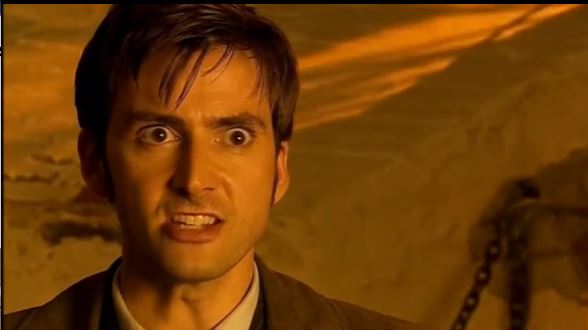
“… if I can find the right one, if I can just know you …” (see the video clip, below)
That’s how this scene from Doctor Who begins, from one of my favorite episodes, The Shakespeare Code. You don’t have to be a Doctor Who fan to get the Aha! moment I just had that reminded me of how The Doctor vanquishes an evil foe’s power simply by naming her. “There’s a power in words …” he says.
I’ve recently been dealing with some scary health issues for which I’ve been struggling to receive a diagnosis. Not knowing what’s “wrong” has been excruciating. The anxiety alone magnifies any symptoms. It’s a vicious cycle, a downward spiral so severe that even my most upbeat, heal-thyself methods have not been working.
Finally, though, I have a pretty good idea of what’s going on inside. Thank goodness it’s nothing fatal, but it is challenging. This knowledge alone has vanquished the anxiety’s power to curl me up into the fetal position. Naming the “illness” gives me power. Now I know what I’m dealing with.
There’s a power in words.
I’m reminded, more importantly, of the work of a man I’m grateful to call a friend, Paul Levy, who writes and teaches about a “mind-virus” called wetiko. Essentially, wetiko is all-the-bad-things, which are running on a loop below the surface of consciousness, mucking everything up. The only way to dissolve wetiko’s power is to see it, to name it. This is why those “Aha!” moments are so healing.
Paul does a much better job explaining it than I do, so check out his newest book. The reason I bring up wetiko here is that this is how I feel about naming my symptoms with a diagnosis.
I see you. I name you. You have no power over me.
(For my fellow Whovains, here’s another fine example of wetiko as dramatized by Steven Moffat … The Silence.)
Lisa Bonnice is an award-winning, best-selling author whose “day job” is as a Program Host at The Shift Network, where she hosts summits on ancestral healing, life after death, and intuition and medicine.
Her most recent book is a metaphysical comedy novel entitled The Poppet Master (previously published as Be Careful What You Witch For!, now revamped and with a new ending). The Poppet Master is a modern-day fairy tale about Lola Garnett, a bored housewife and office drone who wakes up with unexpected psychic abilities, and no instruction manual, and Twink, the reluctant, sarcastic faery assigned to assist and educate her. The Poppet Master is available wherever books are sold. Its sequel is in the works.
Lisa is also writing The Maxwell Curse, a fictionalized version of a story she found in her own ancestral lineage about a witch trial, a generational curse, and massive mine explosion, all of which left ripples of destruction in their wake, devastating one family’s tree.
Research shows that our very DNA can hold the traumas of our ancestors. Unresolved inherited pain can play a prominent role in anxiety, depression, hereditary diseases, and a range of physical and emotional challenges. The good news is that there is something you can do to mitigate inherited patterns and ease ancestral traumas that are affecting your life now. You can bring peace to painful relationships, legacies, and events, and live a happier, healthier life with a deeper sense of belonging and connection.
No matter who you are, you walk through life carrying ancestral ripples of energy — the burdens and blessings of your lineages — within you. Through the practice of Genealogical Regression, you can meet with your ancestors, send healing energy to everyone in your family (whether they’re living or they’ve passed on — even if you were adopted), and dissolve distressing patterns that have been carried in your lineages for lifetimes.
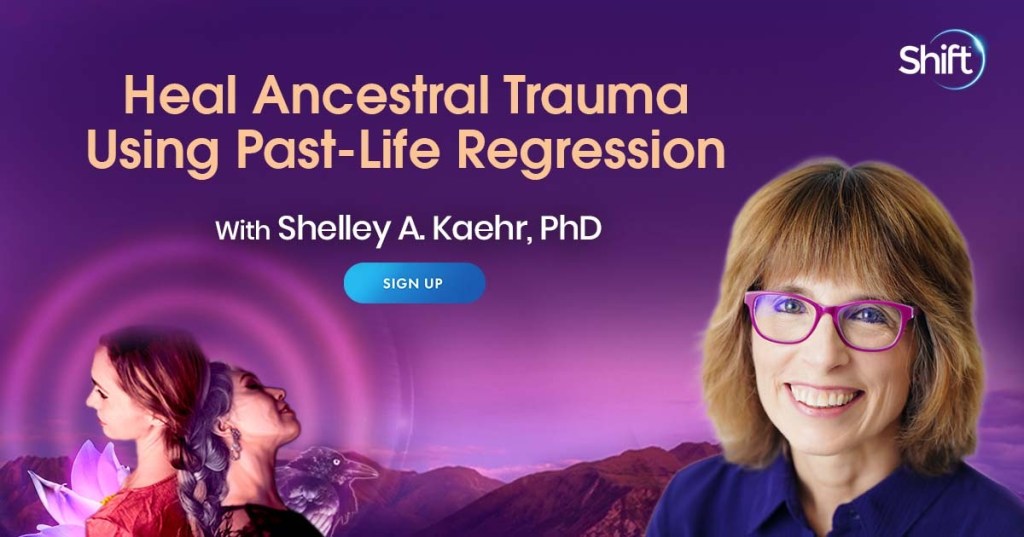
Check it out on Saturday, February 19, for a soul-nourishing event, as the creator of Genealogical Regression, Dr. Shelley Kaehr — a world-renowned past-life regressionist and a pioneer in mind-body wellness — introduces you to her unique healing modality.
Explore what Genealogical Regression is — and how it can help you heal family trauma, break free from deep-seated burdens, and send healing blessings up and down your lineage
Be guided through a powerful visualization journey to connect with your ancestors and send them healing light… to raise the vibration of your entire family — past, present, and future
Understand the difference between Genealogical Regression and past-life regression
Discover why it’s key to connect with your ancestors at the level of their higher selves, transcending difficult patterns and talking soul-to-soul
Find out why healing your inner child is the first step to gently resolving suffering from past events, lingering pain, and difficult emotions
Raising the vibration of your lineage can benefit not only you and all those in your family’s past, present, and future — but everyone who comes across your kin in daily life. As your positive intentions ripple outward, you become part of the solution that all of humanity needs so much right now.
When you start breaking free from painful legacies, you’ll feel lighter, be better able to fully express the gifts you’re here to share, and be empowered to make enormous positive transformations in your life and the world.
… you’ll experience a powerful guided journey to send your ancestors healing light and raise the vibration of your entire family — past, present, and future..
I hope you’re able to catch the event as scheduled. But if you register and miss it, you’ll receive a downloadable recording as soon as it’s available.
Lisa Bonnice is an award-winning, best-selling author whose “day job” is as a Program Host at The Shift Network, where she hosts summits on ancestral healing, life after death, and intuition and medicine.
Her current passion-project is a series of metaphysical comedy novels. The first is entitled The Poppet Master (previously published as Be Careful What You Witch For!, now revamped and with a new ending). The Poppet Master is a modern-day fairy tale about Lola Garnett, a bored housewife and office drone who wakes up with unexpected psychic abilities, and no instruction manual, and Twink, the reluctant, sarcastic faery assigned to assist and educate her. The Poppet Master is available wherever books are sold. Its sequel is in the works.
Lisa is also writing The Maxwell Curse, a fictionalized version of a story she found in her own ancestral lineage about a witch trial, a generational curse, and massive mine explosion, all of which left ripples of destruction in their wake, devastating one family’s tree.
If you, like so many others, are wondering what you can do to help humanity find its way through these strange and transformative times — especially if your skill-set doesn’t include inventing new ways to adapt to climate change or running for political office — Ancestral Healing is something you can do to help.
Our current world’s condition is the culmination of centuries of built-up, unhealed traumas and our ancestors are clamoring to us to help right their wrongs, before it’s too late.
It’s time for The Shift Network’s fourth annual Ancestral Healing Summit, a free online event from January 18-21.
Many of us are finding that this powerful and important work is exactly what we’re here to do. We are, as Heather Dane calls us, Generational Pattern Shifters. We feel an urge … we hear a calling … to work with our ancestors to heal not just our own dysfunctional family patterns, but global damage done to and by generations past in the forms of plagues, diasporas, holocausts, slavery, colonization, wars and other extreme traumas that are still causing ripple effects today.
This year’s summit includes powerful conversations with luminaries like Thomas Hübl, Sandra Ingerman, Christina Pratt and Jill Purce. We discuss the big picture and our places in it, and what our contributions to global healing can be.
Even more conversations include practical tools we can use to communicate with our ancestors to ask for their help and work with them, hand in hand.
Shelley Kaehr talks about generational regression, which is similar to past-life work, except that we can be regressed into ancestral storylines. Masami Covey shares how our bodies demonstrate ancestral traumas, and how to interpret the stories they’re trying to tell us. Kelly Sullivan Walden offers an excellent method of tapping into ancestral messages via our dreams.
Carrie Paris offers a practice using phases of the moon to release ancestral family patterns, and Nancy Hendrickson talks about how we can use the Tarot to divine messages directly from Spirit, and our kin, to help us along our path. Fern Vuchinich and Christina Caudill both offer information about how astrology can help us dig in to our stories and untangle snarled webs.
Dr. Velma Love offers a beautiful and empowering reframing of the experience of enslaved peoples. Liza Miron discusses the repercussions we are all feeling due to generations of our grandmothers experiencing painful loss of pregnancies and difficult childbirths, and Langston Kahn offers a perspective on healing the “father wound”.
Ancestral Healing is breathtaking in its scope — once you’ve experienced the power of this work, you’ll never look at life the same way. You can see for yourself when you register for the event and check out the power-packed lineup of speakers for this year’s Summit. I promise, you’ll be glad that you did. And, it really is free to watch while the Summit is live. The only cost is if you purchase the upgrade package to add this collection, and its gorgeous selection of bonuses, to your digital library.
I do hope you’ll join us for The Ancestral Healing Summit, a FREE online event from January 18-21. I’ll see you there!
Lisa Bonnice is an award-winning, best-selling author whose “day job” is as a Program Host at The Shift Network, where she hosts summits on ancestral healing, life after death, and intuition and medicine.
Her current passion-project is a series of metaphysical comedy novels. The first is entitled The Poppet Master (previously published as Be Careful What You Witch For!, now revamped and with a new ending). The Poppet Master is a modern-day fairy tale about Lola Garnett, a bored housewife and office drone who wakes up with unexpected psychic abilities, and no instruction manual, and Twink, the reluctant, sarcastic faery assigned to assist and educate her. The Poppet Master is available wherever books are sold. Its sequel is in the works.
Lisa is also writing The Maxwell Curse, a fictionalized version of a story she found in her own ancestral lineage about a witch trial, a generational curse, and massive mine explosion, all of which left ripples of destruction in their wake, devastating one family’s tree.
Priceless heirlooms or burdensome dust collectors? How you feel about family heirlooms can tell you a lot about yourself and your ancestral history.
I saw an article online recently about how the younger generation isn’t interested in family heirlooms. I’m both scandalized by and understanding of that attitude. I think that’s something that evolves if you manage to live long enough. From the perspective of ancestral healing, the question takes on a new depth.
When you ask yourself how you feel about heirlooms, it can tell you a lot about family behavior patterns that you might not have considered before. So ask yourself, depending on which side of the coin you favor:
Why do you feel that heirlooms must be passed on? Do you feel that your ancestors’ stories can be kept alive by bequeathing the items they owned to their descendants? Or, are you more interested in their value as antiques? If your heirlooms were destroyed or stolen, which flavor of loss you would feel?
OR
Why aren’t you interested in taking on the responsibility of family heirlooms? Is it about not cluttering up your house with relatively (no pun intended) meaningless stuff? Do you see it as a bunch of old crap that belonged to people you never knew (or cared about)? Do you move too often and don’t have a stable place to store or display them? What are your thoughts?
When I asked myself about my family’s heirlooms, which I now treasure, here’s what I realized:
When I was a kid, I was interested when family lore was shared, but that didn’t happen often. I didn’t feel a great sense of connection with my ancestors. All I knew was my mom’s dad immigrated from Scotland and my dad’s dad came from Malta. Both of my grandmas were born in the US and I didn’t know their nationalities. I don’t recall any heirlooms on display in our house. I learned years later that they were stored in a box in the attic.
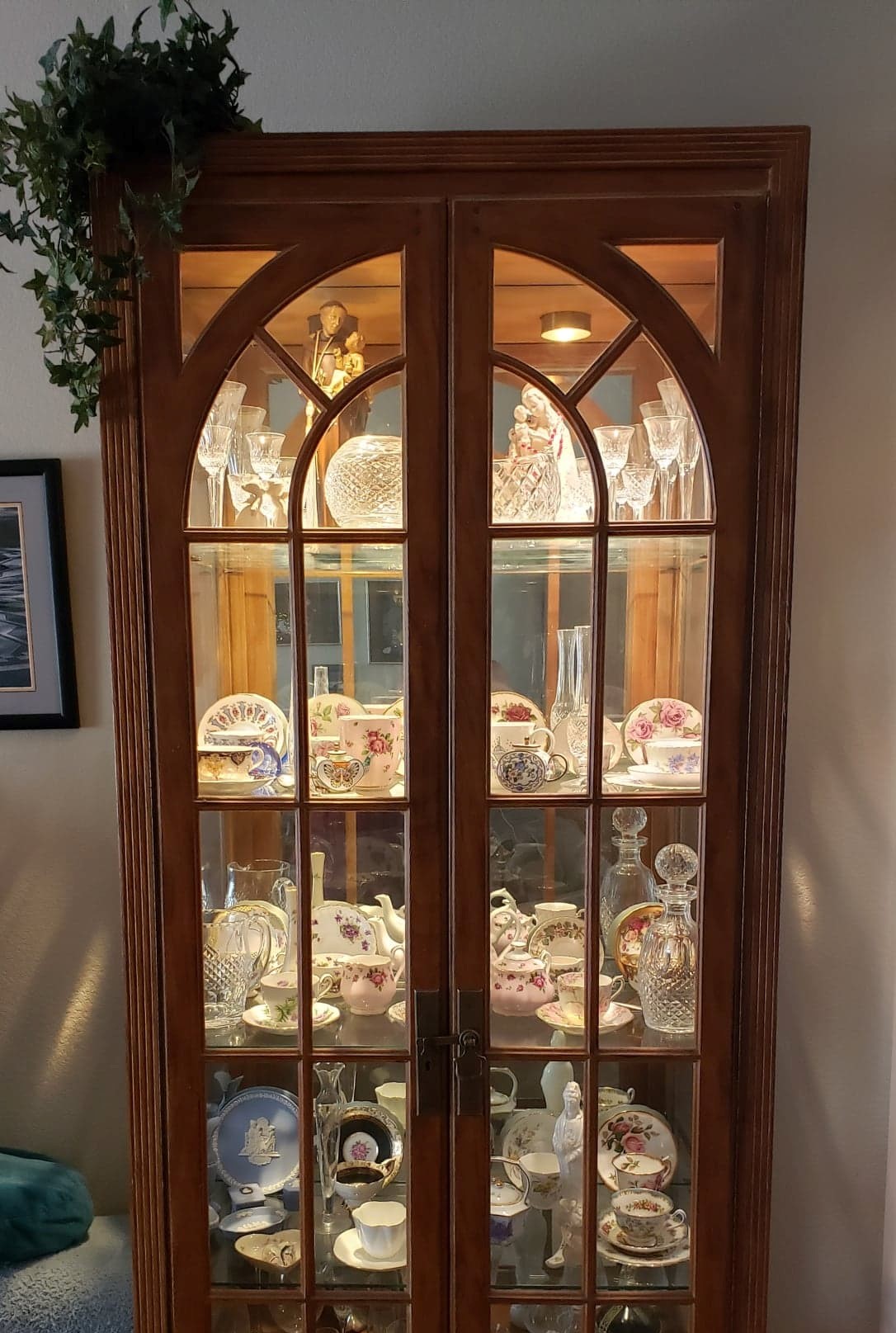
As I grew up, as the only girl, my mom started talking about passing her china and silver down to me. And, as my mom grew older and more affluent, she began collecting things of her own that would be heirlooms for future generations. She had an exquisite collection of trinket boxes and Royal Albert style bone china teacups that she wouldn’t allow anyone to touch. They stayed behind glass in lighted display cases.
Mom would get mad at me because, in her eyes, I was too irresponsible to take care of all these things if she suddenly died. I was young and moved around a lot, I struggled to make ends meet, and the last thing I wanted to think about was taking care of a bunch of meaningless stuff that would someday be foisted on me. To worry about teacups and trinket boxes seemed almost insulting when I couldn’t afford to get my kids vaccinated to prevent them being expelled from elementary school. The guilt trips I received over my inability to take care of things I didn’t want or ask for were insane (I took the guilt trips to heart at the time … I only see the insanity now, in retrospect).
There is almost nothing from my dad’s side of the family. I didn’t know his parents well, as we lived in another state, and we called them by the formal names Grandmother and Grandfather. As far as heirlooms go, there’s only a decorative plate that belonged to Grandmother, who gave it to my mom as a thank you gift for doing her hair for a special occasion. Grandmother died when I was six and we didn’t visit Grandfather often. My most vivid memory of him was his gorgeous Maltese accent, which he never lost after seventy years in this country, and he called me “Leeza”. Oddly, just remembering the sound of his voice brings tears to my eyes.
As Mom got old, after Dad died, I knew that I’d be inheriting these things sooner rather than later. By this time, I had become keenly interested (obsessed, actually) with genealogy and starved for information about my ancestors. I wanted to know the stories behind the heirlooms. Who did they belong to? Where did they come from?
For reasons known only to her, Mom clammed up. I would say to her, “How about if you and I spend some time together cataloging your collectibles? I’ll take pictures of everything and you tell me their stories. That way, the information can be passed on for generations.” She always put me off, and refused to tell me.
This is the cup and saucer that my grandma smuggled into the US, one of my favorite stories about her.
She took that information with her when she died. The only story she ever shared was about a teacup and saucer that my grandma smuggled into the US from Canada. She hid the saucer against her belly, beneath her girdle, and the cup beneath her bra. I thought this was a marvelous story and I treasure it and the cup and saucer.
When I’d ask, as a youngster, to use one of the teacups she’d say in a reverent tone, “No, that’s veryexpensive!”
In reality, they weren’t very expensive. Yes, Royal Albert was a grade or twelve above what we used in daily life, but what she was saying was she didn’t trust me to not break her valuable things. She continued this distrust when she got so mad at me for not settling down into the kind of life she lived, with her house in the suburbs and a safe space to store stuff.
I still don’t know why she wouldn’t tell me the history of the items. I suspect it’s because, in her elder years, she became miserly and felt like everyone wanted to take her things. She felt put upon and taken advantage of, which was truly not the case. No one in the family deliberately did this to her. Everyone was respectful of her things and her fears. I can only assume that this was a buried psychic pattern, an ancestral wound.
Mom valued things for their monetary value and I treasure them for their stories. It breaks my heart that I’ll never know the origins of many of the items.
I’ve chosen to explore this aspect of my mom’s psyche because if she had this bent perspective, so do I, even it’s expressed in a different way. She expressed the dysfunctional pattern as a fear of people taking her things, but it expresses in me as “I’m not good enough, mature enough, responsible enough to take care of very expensive things.”
Perhaps that’s why I choose to look at these very expensive things as stories, instead. I’m a great caretaker of stories. Maybe that’s what made me the family historian. It’s not about the money spent, it’s about the people who spent it.
Now that I’m in possession of a portion of Mom’s collectibles, I keep her teacup collection in her display case, which I inherited. I make a deliberate point of inviting my kids and grandkids to carefully choose a cup for a spot of tea, which I make in my own teapot that I hope someday my kids will fight over inheriting, instead of dreading having to store their mom’s old crap.
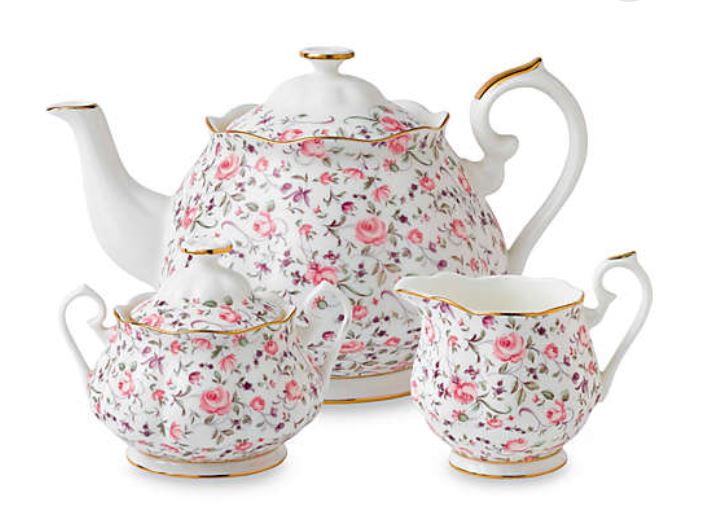
My way of breaking this pattern, aside from allowing the kids to respectfully use the teacups, was demonstrated recently on my granddaughter’s 21st birthday. She and I have spent many afternoons sipping tea and eating scones together, and she’s beginning to collect household items for her first apartment. With this in mind, her birthday gift was her very own Royal Albert teapot set, in a design pattern that fits her personality.
I hope she’ll pass her tea set along to her progeny as an heirloom of her own, along with the teacup my grandma smuggled in from Canada in her bra, and the “Feed the Birds” cup that I bought at St. Paul’s Cathedral in London, and all the other items I’ve told her stories about …
Lisa Bonnice is an award-winning, best-selling author whose “day job” is as a Program Host at The Shift Network, where she hosts summits on ancestral healing, life after death, and intuition and medicine.
Her current passion-project is a series of metaphysical comedy novels. The first is entitled The Poppet Master (previously published as Be Careful What You Witch For!, now revamped and with a new ending). The Poppet Master is a modern-day fairy tale about Lola Garnett, a bored housewife and office drone who wakes up with unexpected psychic abilities, and no instruction manual, and Twink, the reluctant, sarcastic faery assigned to assist and educate her. The Poppet Master is available wherever books are sold. Its sequel is in the works.
Lisa is also writing The Maxwell Curse, a fictionalized version of a story she found in her own ancestral lineage about a witch trial, a generational curse, and massive mine explosion, all of which left ripples of destruction in their wake, devastating one family’s tree.
Dig this: I’m not a bad enough person to feel as bad as I once did. While I’m not perfect, I’ve never caused enoughharm to deserve the levels of guilt and anxiety I’ve dealt with most of my life. In order to feel this much guilt and fear of punishment, I would have had to commit a heinous crime. Guess what … not guilty.
So where do these unwanted feelings of unwarranted unworthiness come from? Societal conditioning? Brain washing by Madison Avenue and/or the Illuminati? Past life karma?
Or, it could come from ancestral trauma. The science of epigenetics has proven that traumatic events, which cause a fight-or-flight reaction, can change the way our genes express themselves. This physical manifestation of PTSD gets passed down through the generations. Here’s just one article explaining how it works, if you want more information. As the host of three annual Ancestral Healing Summits for The Shift Network, I’ve interviewed a ton of experts who agree on this so, for me, this is not in question.
My session airs Thursday, February 25, 1pm Pacific, and will stream free for 48 hours after.
Ancestral trauma can kink your hose in ways you don’t even realize. In fact, in my own session of this year’s Ancestral Healing Summit, the awesome Nick Mattos and I talk about how to rediscover and reawaken your magical heritage by looking into your ancestral past, to discover where/how your connection to your gifts might have been broken.
For clarity, when I used the words magicalheritage, I’m talking about natural gifts and abilities that we all have, things like a green thumb or a knack for cooking, crafting, or even healing and intuitive abilities. Sharing these gifts in communities are how humankind survived for as long as we have before technology made life so much … ahem … easier. These skills were often the causes of accusations of witchcraft which, as we know, resulted in some pretty heinous behavior.
But because many of our gifts have been oppressed, we may not even know we have them. Or, we may be aware of them, but are afraid to demonstrate them for fear of reprisals or rejections.
You should check out the Summit. I had some amazing conversations with some amazing people, who had amazing information to share. It airs free during the week of February 22-26. My session airs at Thursday, February 25 at 1pm Pacific time, and will stream free for 48 hours after that.
And, at the risk of sounding like a crummy commercial, I also talk at the end of my interview with Nick about a new project I’ve been working on with the lovely and talented Carrie Paris. Since discovering her Relative Tarot and Oracle, I’ve become a big fan of her work. (Check out the interview I did with Carrie for Mind Yourself on the topic of communicating with ancestors.)
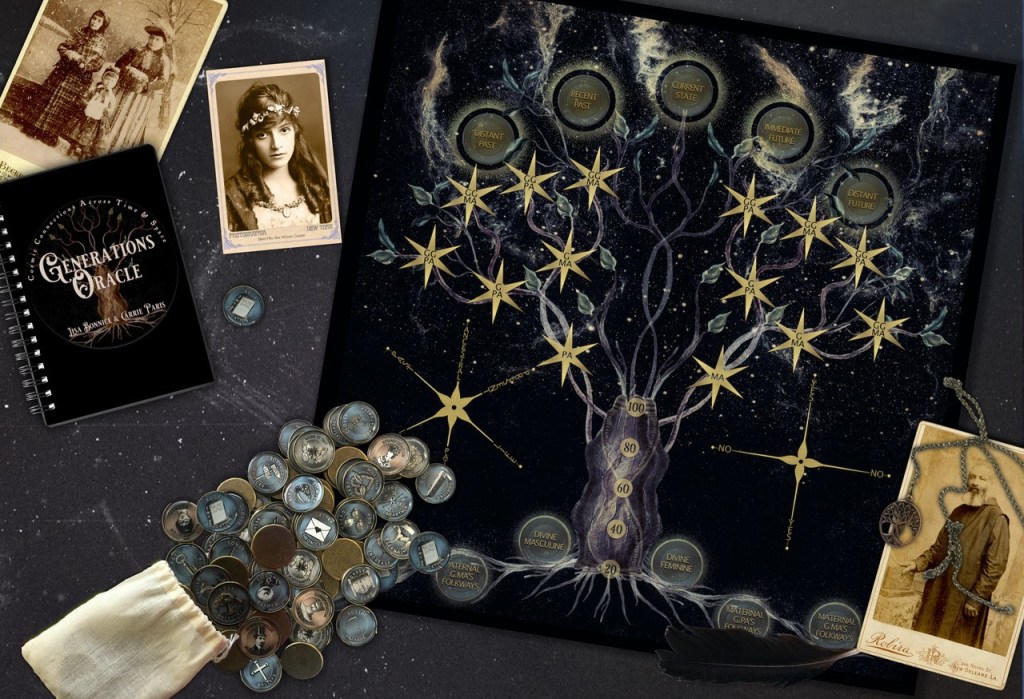
As Carrie and I got to know one another, she suggested that we combine our areas of expertise to create an oracle designed around ancestral healing, I jumped at the chance. Check out the Generations Oracle!
This divination kit (featuring Carrie’s gorgeous artistry), includes a reading cloth, casting charms, a pendulum, informational coins (based on the Lenormand oracle symbols) and an instruction booklet. Bring your own ancestors. We’ll be teaching classes in its use further down the road, so let me know if you’re interested in getting on the waiting list by subscribing to my blog. That will be the best way to stay in the loop.
Anyway, back to ancestral healing … I’ve talked about this elsewhere, but it bears repeating. By doing this work, I feel so much less existential guilt and anxiety. I understand my mom — the unintentional source of some of my pain — so much better. I grok how her family history dented her in ways that were beyond her ability to cope, or even repair without a lot of inner work. And people in previous generations didn’t know about the kinds of inner work we’re used to these day.
I see, now, how she felt as bad about herself — worse actually — than I did before embarking on my own inner work. She was, by all accounts, a good person who loved her family. She was a good mom. But she was screwed up by her family story, and passed it on to me … which I passed on to my kids, and they passed on to their kids …
What happened in my mom’s lineage to break her in just this way? I’m still scratching the surface (in fact, I’m writing a novel based on the fascinating story I discovered in my mom’s ancestral history about witch trials and mine explosions), but I can say, without a doubt, that her father experienced numerous mind-bending traumas in a very short time frame, at a fairly young age. He didn’t stand a chance to be a healthy individual, much less a healthy parent. The pain he was in could have easily caused my mom to feel the way she did, and for me to feel how I felt, and my kids, and their kids …
I’ve been working with my mom’s father’s ancestors because, in triage order, this branch needs attention more than the others — it’s the most wounded. Since beginning this exploration, my physical and mental health have improved tremendously. I used to keep my bottle of Xanax with me at all times, just in case. Now, I only rarely feel anxiety intense enough to medicate myself. That, in itself, is a tremendous shift.
What about you? Do you see anything in yourself, like this, that just doesn’t make sense until you look at your ancestral history? I’d love to read your stories in the Comments.
Lisa Bonnice is an award-winning, best-selling author. Her current passion-project is a series of metaphysical comedy novels. The first is entitled The Poppet Master (previously published as Be Careful What You Witch For!, now revamped and with a new ending). The Poppet Master is a modern-day fairy tale about Lola Garnett, a bored housewife and office drone who wakes up with unexpected psychic abilities, and no instruction manual, and Twink, the reluctant, sarcastic faery assigned to assist and educate her. The Poppet Master is available wherever books are sold. Its sequel is in the works.
Lisa is also writing The Maxwell Curse, a fictionalized version of a story she found in her own ancestral lineage about a witch trial, a generational curse, and massive mine explosion, all of which left ripples of destruction in their wake, devastating one family’s tree.
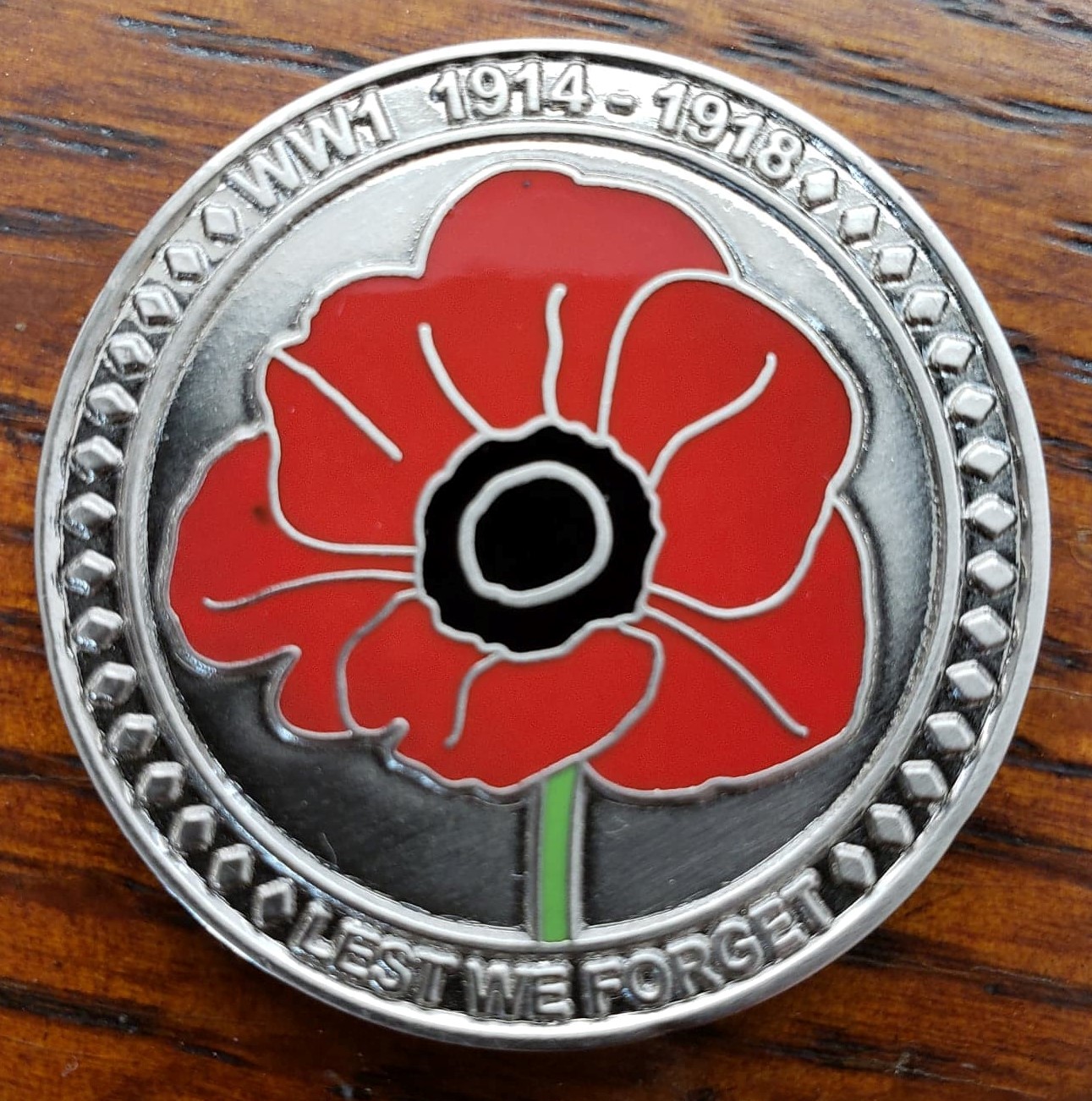
A commemorative coin I picked up in Saltcoats, Scotland, 2019
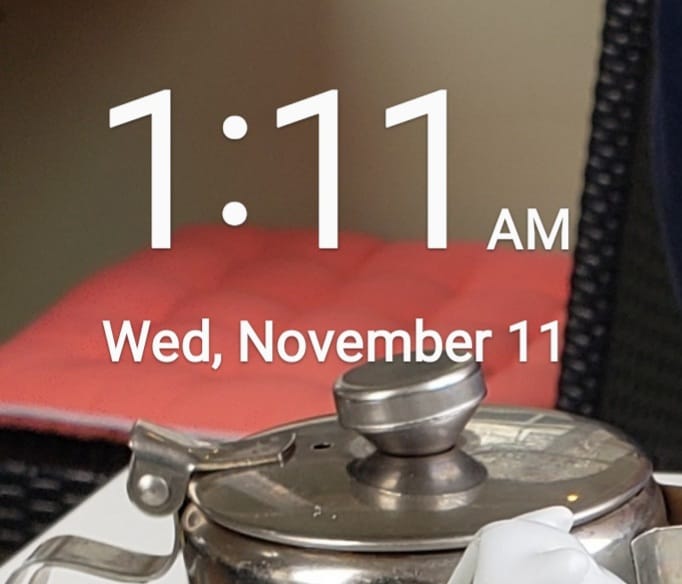
It’s 11/11, Veterans Day in the United States. For many New Agers, seeing all ones on the calendar or clock has an angelic meaning, especially at 11:11 on 11/11. In fact, I just happened to be awake at 1:11 this morning and took a screen shot on my phone. Today, however, I’m reminded of something that happened over a hundred years ago — the celebration of Armistice Day and the end of WWI — and I’ve got a marvelous story to tell about synchronicity and an honored ancestor.
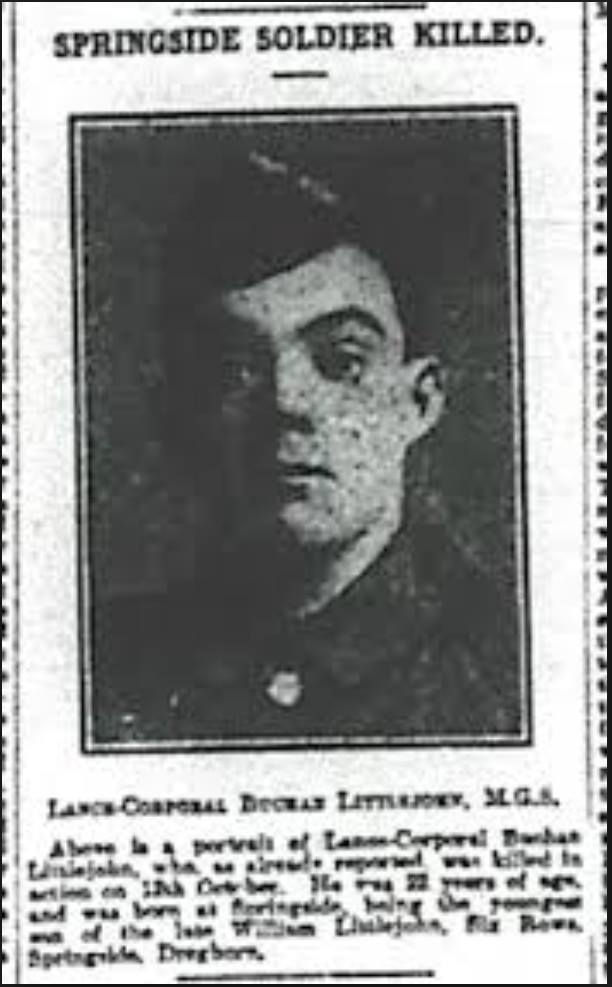
My mom’s paternal ancestry is wholly Scottish and her grandmother Helen’s little brother, Buchan Littlejohn, was my second great uncle. Helen raised Buchan and her four younger siblings after their mother died when Helen was fourteen and Buchan was four.
Kilmarnock Standard, November 4, 1916
Buchan joined the Royal Scots Fusiliers shortly after WWI was declared. He was sent as a Private to France and was almost immediately wounded, and sent home in July 1915. He spent eight months convalescing before being sent back to France in March 1916 as a Lance Corporal. He was killed in an attack on Bayonet Trench, during the Battle of Le Transloy at the Somme, October 12, 1916 and eventually buried at the A.I.F. Burial Ground in France.
As both parents had died by that time, Helen was listed as his next of kin on his military records. The military dispersed Buchan’s belongings to her and their other siblings.
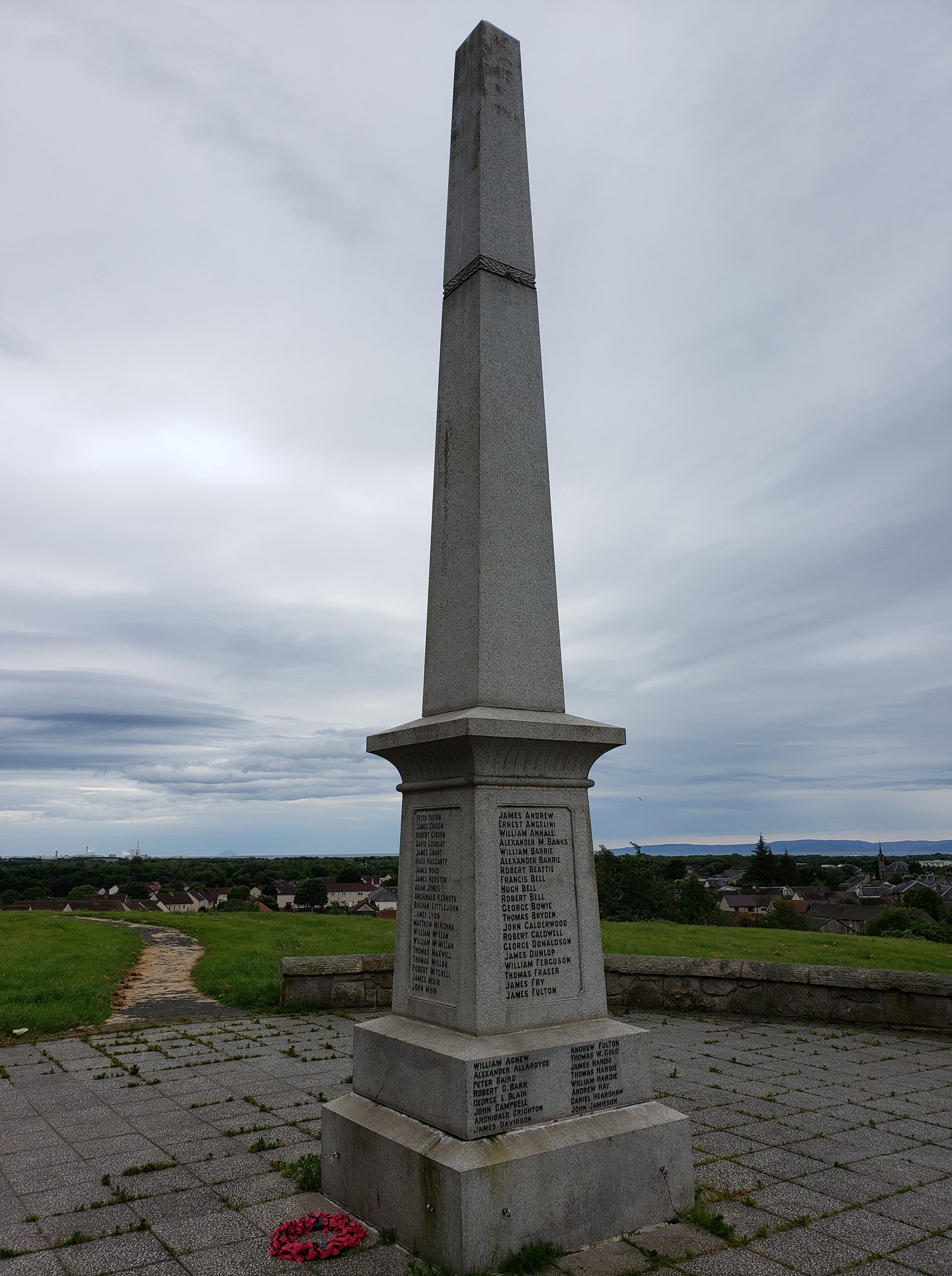
WWI Monument, Dreghorn Scotland
When my husband, brother and I visited Scotland last summer, we made a special point of digging up as much information on Buchan as we could find. As there was no local grave to visit, we climbed a steep hill in Dreghorn to find this monument with Buchan’s name on it. He’s listed here with other young men from the area who were killed in the “Great War”. He was only 22.
Short of taking a trip to France to visit his grave, I thought that was the end of the information I could find about my great-grandma’s baby brother. I was wrong.
A few months ago, I found a message in my Ancestry.com inbox from someone named Rita, asking if anyone in my family had ever lived in Tacoma, Washington. She and her husband Roger had found something on their property there, when building their house fifty years ago, and had always wondered how it got there. With the advancements in technology since then, she was finally able to make a real effort to track it down.
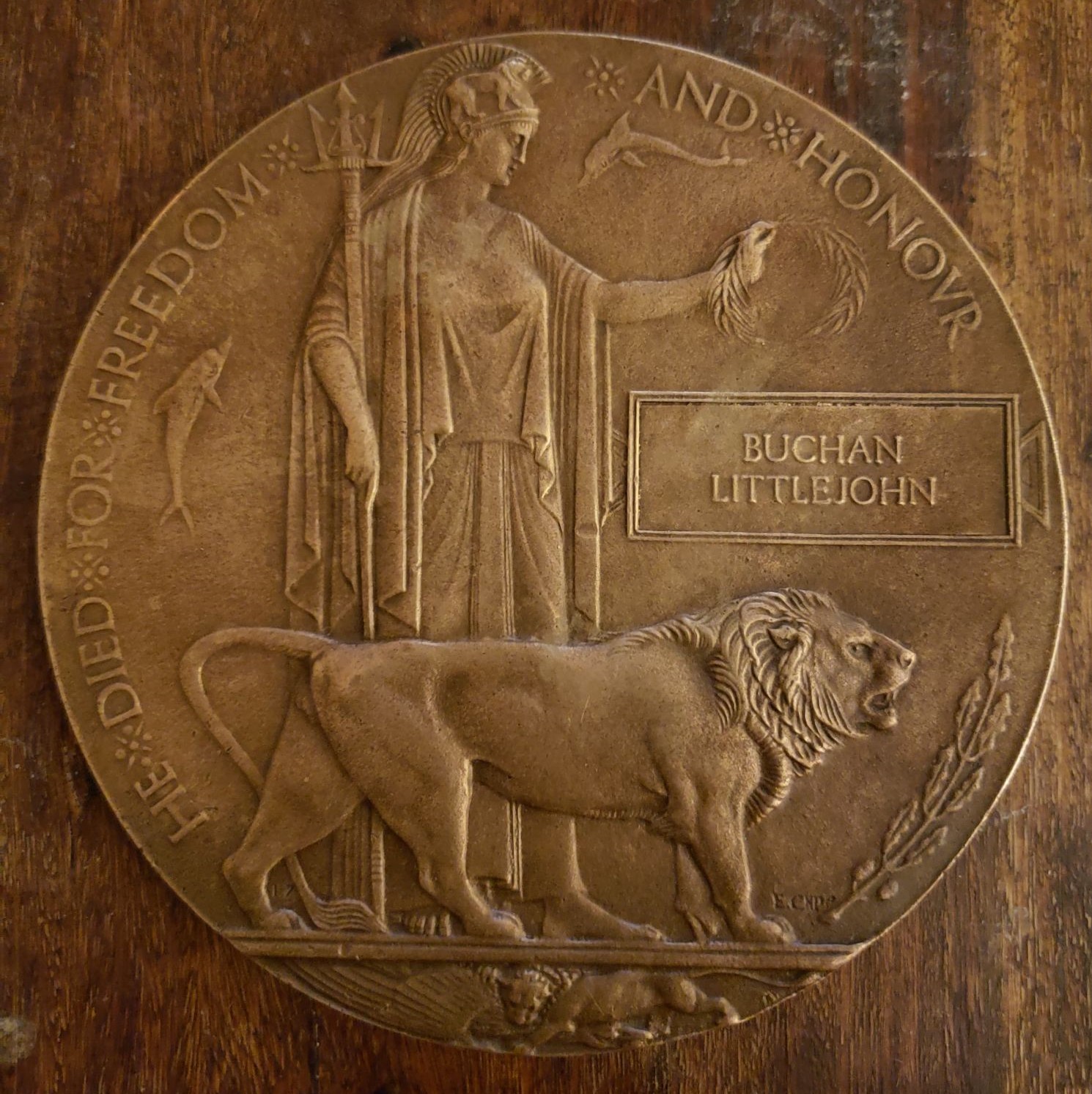
What they had found was a Next of Kin Memorial Plaque (also known as a Dead Man’s Penny) with Buchan’s name on it. While this made me tingle with excitement, I had no idea how it could have gotten all the way to the far west coast of the United States.
Helen and her family emigrated to Utah in the early 1920s. She would have received the plaque, as next of kin, in 1919 when they were awarded by King George. She would have brought it with her to Utah, where they settled in the coal mining town of Castle Gate, Carbon County, where three of her older brothers lived and had risen in rank to be foremen and supervisors at various mines in Carbon County.
Helen died shortly after arriving in the States, at the tragically young age of 39. Her husband died six months later, leaving their kids orphaned. Their children all eventually ended up in Michigan. None ever lived in Washington state.
Rita and I corresponded for months, trying to solve the mystery. I chased down all sorts of loose threads on Ancestry.com. Some brought me to Washington state, as a few descendants of Helen’s brothers went west, but no one ended up in Tacoma.
Finally, a breakthrough happened when Ancestry popped up one of their famous “green leaf” hints. I discovered that Helen’s oldest brother’s daughter eventually settled in Tacoma, just a couple miles from Rita’s house. This brother, as head of the family in the US, must have assumed ownership of the plaque after the deaths of Helen and her husband. Helen’s niece, I assume, took possession of the plaque after her father died.
That’s as far as my search took me … just a few short miles away from Rita’s property. Further digging, though, showed me that the niece divorced and remarried. Her new husband just happened to own the property adjacent to Rita and Roger’s new land but because the niece took on her husband’s name, and no longer lived there, there was no way to connect the last name “Littlejohn” to anyone there.
As the niece had no children, the ancestral lineage stopped there. Rita, who has become a good friend, kindly and generously sent the plaque to me, and it hangs in a place of honor in my home.
It may have been my imagination, but the first time I held the plaque in my hands, knowing that it belonged to my great-grandmother — the only one of my great-grandparents I have no picture of — I swear I felt a ripple in time as I ran my fingers over Buchan’s engraved name. I’m quite sure Grandma Helen did the exact same thing, at least once.
Thank you, Rita and Roger, for helping to close the circle and bring Buchan’s memorial plaque back into the family, where he is still remembered and honored.
In loving memory of Buchan Littlejohn, 1894-1916, Lance Corporal – Machine Gun Squadron, Royal Scots Fusiliers
Lisa Bonnice is an award-winning, best-selling author. Her current passion-project is a series of metaphysical comedy novels. The first is entitled The Poppet Master (previously published as Be Careful What You Witch For!, now revamped and with a new ending). The Poppet Master is a modern-day fairy tale about Lola Garnett, a bored housewife and office drone who wakes up with unexpected psychic abilities, and no instruction manual, and Twink, the reluctant, sarcastic faery assigned to assist and educate her. The Poppet Master is available wherever books are sold. Its sequel is in the works.
Lisa is also writing The Maxwell Curse, a fictionalized version of a story she found in her own ancestral lineage about a witch trial, a generational curse, and massive mine explosion, all of which left ripples of destruction in their wake, devastating one family’s tree.
Sometimes the Big U hands you a surprise, and Carrie Paris was one of those! I’ve hosted the Ancestral Healing Summit for The Shift Network for two years and have been searching, all that time, for a divinitory tool to communicate with my own ancestors. While the people I’ve interviewed offered a plethora of ways to do so, my own preferred method is through oracle cards, but I was darned if I could find a deck that suited me.
Divine Timing must have been playing a role because, lo and behold, after this year’s summit interviews were completed, I happened upon Carrie Paris and her incredible Relative Tarot/Spirit Oracle boxed set. I told her how much I love them, how they truly speak to me like nothing else I’ve ever used, and I simply had to interview her.
So, in this episode of Mind Yourself, Carrie and I discuss communicating with our ancestors with the use of these truly magical cards. If you’re into ancestral healing, at all, you owe it to yourself to watch this interview.
The Relative Tarot is a traditional 78-card tarot deck (with extra cards). It also comes with an 80-card Spirit Oracle for ancestral communication and 60 page instructional booklet. Both decks come nested in a sturdy magnetic flip box. These cards are lux, yet easy to shuffle and edged with a dark tea stain. For a full glimpse of each card, check out the video walk-throughs from some of Carrie’s favorite YouTube channels. You can find them, and order the decks, at http://www.carrieparis.com
Lisa Bonnice is an award-winning, best-selling author. Her current passion-project is a series of metaphysical comedy novels. The first is entitled The Poppet Master (previously published as Be Careful What You Witch For!, now revamped and with a new ending). The Poppet Master is a modern-day fairy tale about Lola Garnett, a bored housewife and office drone who wakes up with unexpected psychic abilities, and no instruction manual, and Twink, the reluctant, sarcastic faery assigned to assist and educate her. The Poppet Master is available wherever books are sold. Its sequel is in the works.
Lisa is also writing The Maxwell Curse, a fictionalized version of a story she found in her own ancestral lineage about a witch trial, a generational curse, and massive mine explosion, all of which left ripples of destruction in their wake, devastating one family’s tree.







 Here's you a blog ...